Oprela for Online Stores and Marketplace Sellers
One catalog, one warehouse, and one order queue for your own website, eBay, Allegro, and BaseLinker. How Oprela eliminates manual work from online retail.
Online selling rarely stops at a single website. Today, a product sells in your own store; tomorrow, on eBay; the day after tomorrow, on Allegro. With each new channel, the risk of selling out-of-stock items increases, as does the time people spend copying listings.
Oprela solves this with the "one product — one card" principle: you describe a product once, and the system publishes it everywhere and keeps inventory levels synchronized.
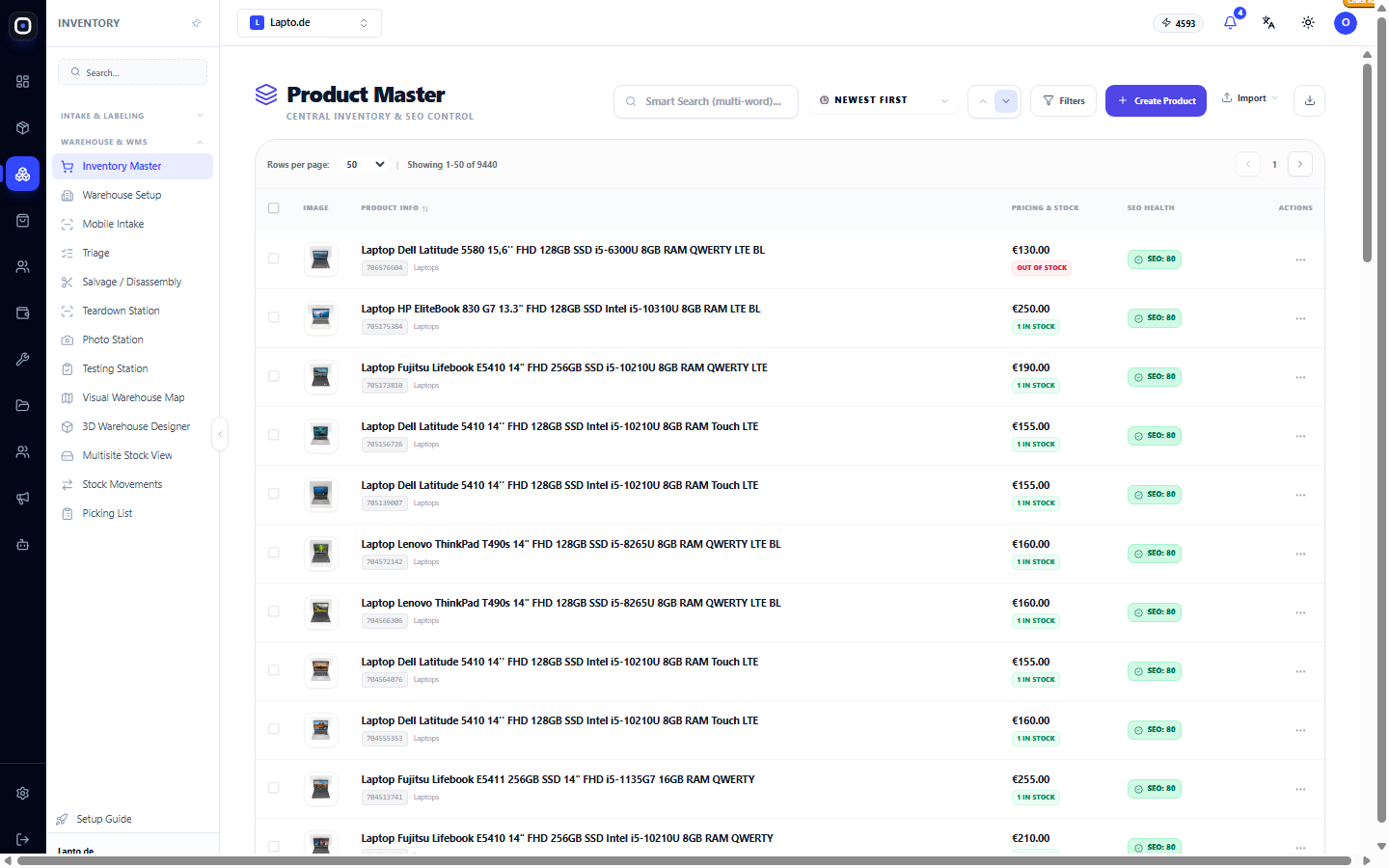
The Catalog Where Everything Begins
The Product Catalog is the hub of online retail. Each product card stores photos, prices, characteristics, stock levels across warehouses, and SEO status. From here, products are published to your website and marketplaces.
- Bulk Addition. Import from CSV, Excel, JSON, or XML, bulk registration, and bulk editing.
- AI Descriptions. An assistant writes product descriptions using your store's templates, in multiple languages.
- Photo Optimization. Cropping, background removal, and compression without a separate graphics editor.
Marketplaces Without Copying
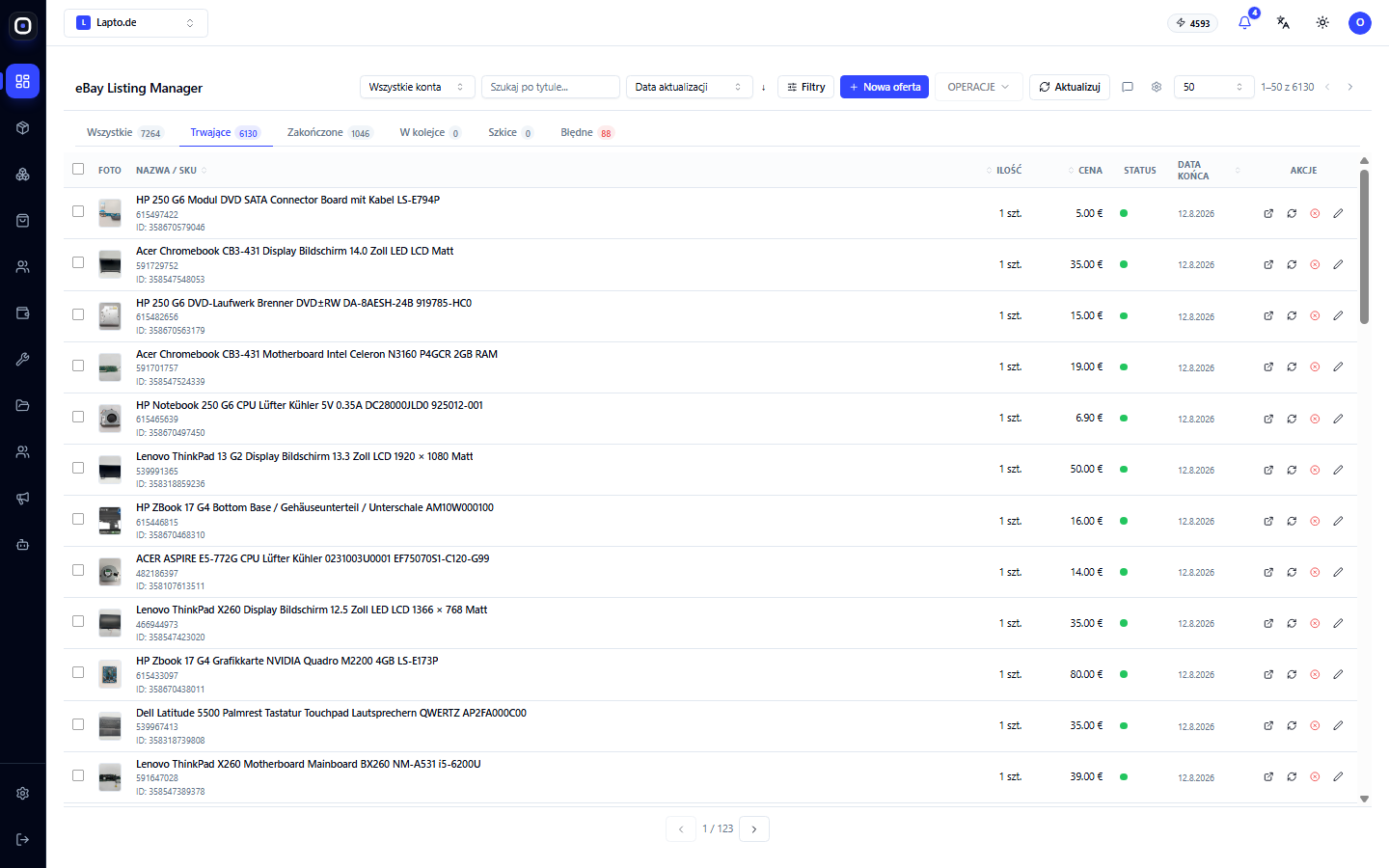
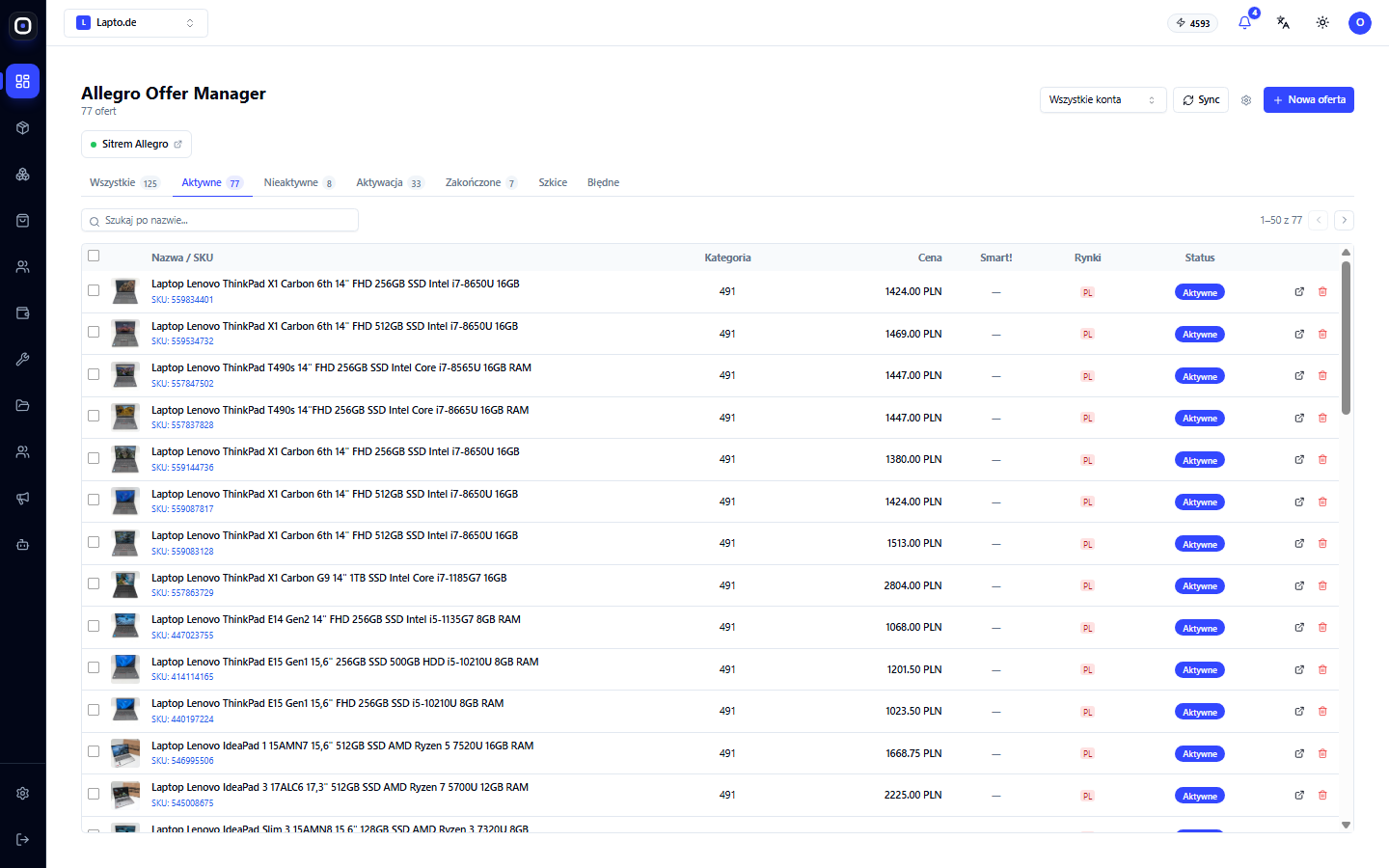
Oprela connects to eBay, Allegro, Hood, and Facebook Marketplace, and also synchronizes with BaseLinker.
- Listings are created from the product card. AI selects the category and fills in required parameters.
- Price or stock changes in Oprela are sent to all marketplaces.
- Buyer messages from eBay arrive in a shared communication center alongside other channels.
- The synchronization status panel shows which listings have errors and why.
Your Own Store
The store's storefront is built using the same builder as the website: categories, filters, shopping cart, customer account, blog. Payments via Stripe, PayPal, Apple Pay, and Google Pay. Discounts, promo codes, gift cards, wholesale pricing with quantity tiers, back-in-stock notifications, abandoned cart reminders.
Orders from All Channels in One Queue
Orders from your website, eBay, Allegro, and BaseLinker arrive in a single list with statuses you configure to match your process. From there:
- the warehouse receives a picking list;
- the courier service (DHL, DPD, InPost) receives shipping details and a label;
- the client receives a status update email;
- finance receives an invoice.
Returns and RMAs follow the same path in reverse.
A Warehouse That Knows the Truth
Multiple warehouses and locations, a visual warehouse map, transfers, goods receipt, picking lists. Inventory changes in the warehouse immediately affect availability in the store and on marketplaces.
What Changes in Work Metrics
- New products appear on all channels in one action instead of several.
- Selling "out-of-stock" items becomes an exception, not a weekly problem.
- Listing descriptions, categories, and parameters are prepared in minutes with AI.
- Order processing from payment to label doesn't require switching between applications.
Who Will Benefit Most
- Stores with inventories ranging from hundreds to tens of thousands of items.
- Sellers who sell the same product simultaneously on multiple marketplaces.
- Sellers of used and refurbished electronics, where each unit is unique (our service center modules can also help here).