Oprela for Metal Fabrication
Sheet and tube, laser cutting, bending, welding, painting, and assembly: how Oprela guides a metal product from a STEP model through nesting, flat patterns, weldments, and robotic cells to a finished structure.
Custom metal products—racks, frames, enclosures, fences, retail equipment—undergo the longest sequence of operations: sheet and tube cutting, bending, drilling, welding, deburring, painting, assembly. Each operation is a separate section, a separate machine, and a separate place for error.
Oprela Manufacturing was created specifically for this type of production.
From Model to Parts
A STEP model is broken down into parts with type recognition:
- Sheet metal parts — thickness, contour, bends;
- Profiles — square, rectangular, round tubes, angles, channels; length and cutting angles;
- Purchased items — fasteners, wheels, hardware.
The specification is generated automatically, and the technologist reviews any questionable areas.
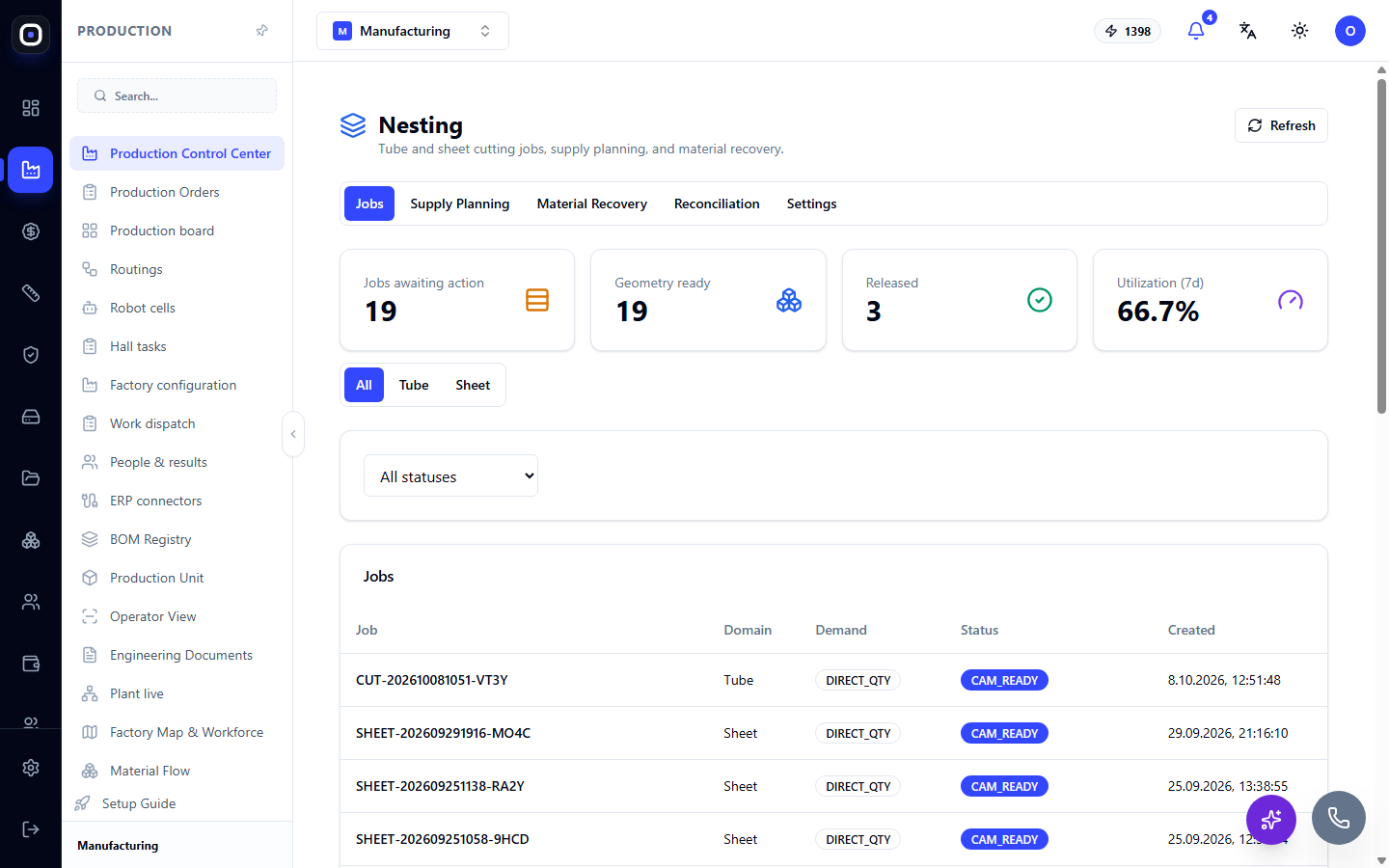
Sheet and Tube Nesting
Parts from all orders are nested onto sheets and tube lengths. The system:
- Plans deliveries, considering what is already in stock;
- Accounts for usable remnants and returns them to inventory after cutting;
- Shows material utilization;
- Prepares tasks for the cutting operator, and after cutting, the operator reports what has been cut, and the parts move on through the route.
Bending
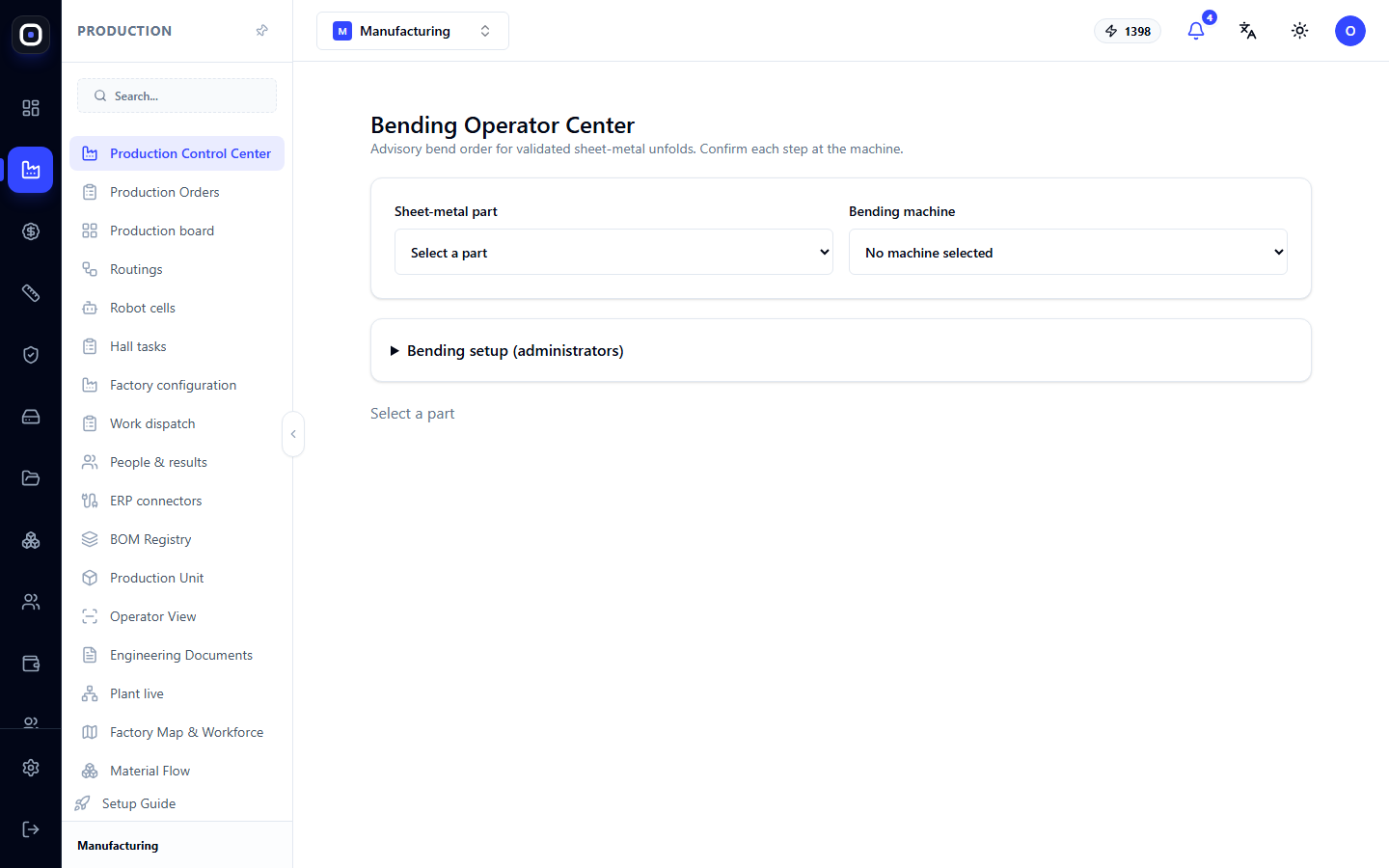
For sheet metal parts, the system builds a flat pattern and a bend sequence. The press brake operator receives instructions in the Bending Operator Center, rather than having to interpret a drawing.
Welding on Assemblies
The most common mistake in the welding shop is welding the wrong parts or in the wrong configuration. In Oprela, the foreman assembles the weldment: which parts are welded together. The welder at the kiosk only sees the weldments assembled by the foreman, with a 3D model and a list of parts, and knows where these parts are located.
Robotic Welding
If you have a welding robot, Oprela describes the cell, the welding technology (WPS), and the tooling, registers and approves programs for specific weldments, and assigns tasks. The system ensures that the program matches the current version of the weldment: if the weldment changes, the program loses its approval and requires re-verification. Robot launch remains with the operator.
Painting and Assembly
Painting, deburring, and assembly operations are standard steps in the route with their own time and performers. The assembler sees which parts are needed for assembly and where they are located.
What a Metal Fabrication Business Gains
- Specification and nesting without manual transfer from the model.
- Less waste due to shared order nesting and remnant accounting.
- Fewer defects in bending and welding thanks to instructions and weldments.
- Traceability: from which sheet a part was cut and who welded it.
- Real cost of goods sold, considering the time of each operation.