Quality and Traceability: The Story of Every Part
Inspections, defects, non-conformities, rework, and scrap linked to a specific part, operation, machine, and person. How Oprela makes quality manageable and answers the client's question, "where did this come from?".
When a customer returns a defective product, a manufacturing company has two options for a response. The first: "we'll look into it." The second: "the part was cut from a sheet of this batch, welded on this day at this station, passed inspection, here are the photos." The second option retains customers. The first does not.
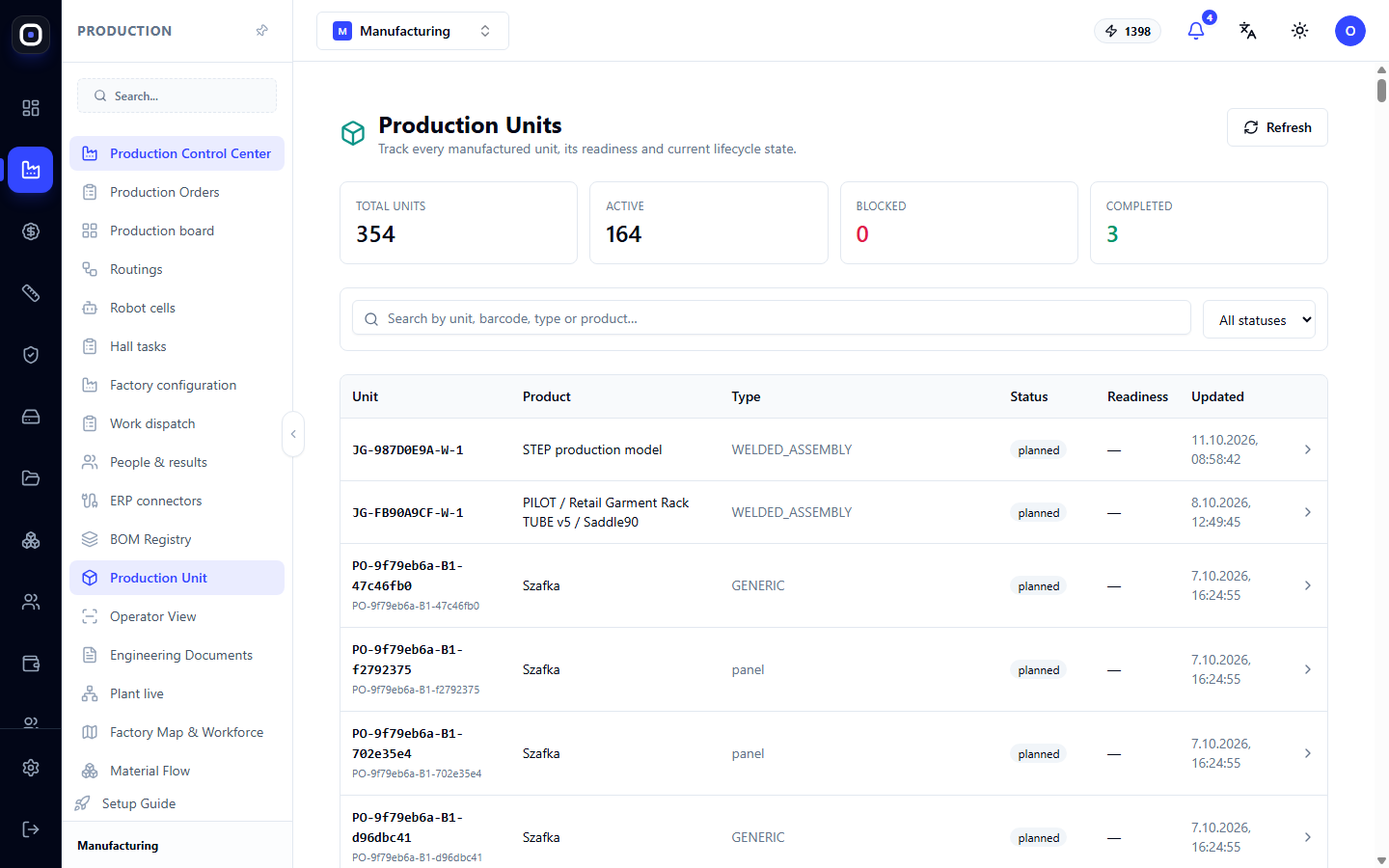
Every Unit Has a History
In Oprela, an order consists of production units — parts and assemblies, each following its own route. For each unit, the following is stored:
- from which material and cutting task it was cut;
- which operations it underwent, on which machine, who performed them, and when;
- which inspections it passed and with what result;
- whether there were defects, reworks, or scrap replacements.
Quality Management
The quality section combines six interconnected tools.
Inspections. Control after operations or before shipment. An inspection can be mandatory: a unit will not proceed until it passes.
Defects. A register of found problems with type, severity, and origin.
Non-conformities. When a defect is systemic or serious, a non-conformity is opened with an investigation and a decision: use as is, rework, or scrap.
Rework. Rework becomes a separate job with an assignee and time, not just "do it incidentally."
Scrap. Writing off a unit requires approval. After approval, the foreman creates a replacement with a single action, and the order does not lose quantity.
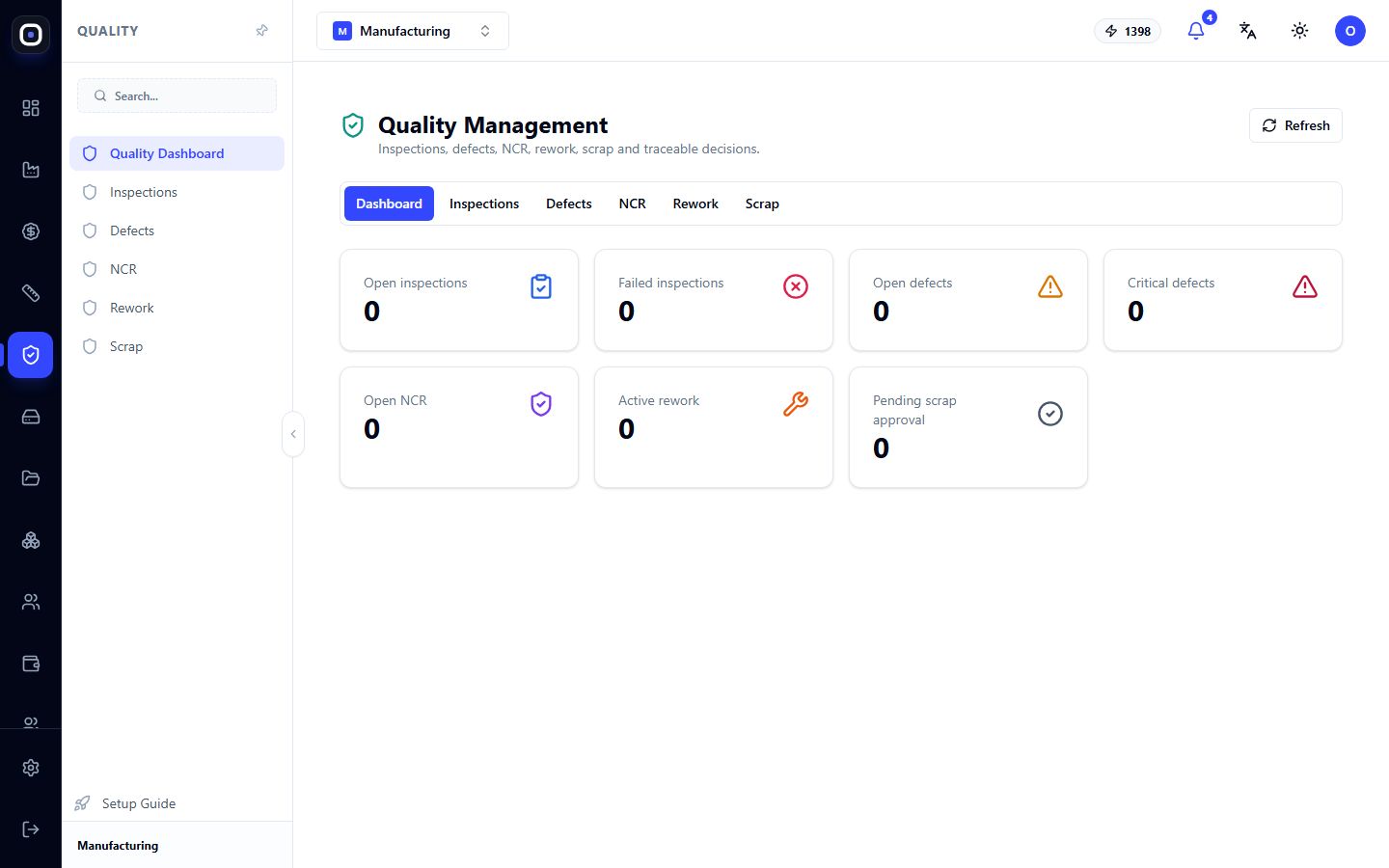
Quality Dashboard
Open inspections, failed inspections, open and critical defects, non-conformities, active reworks, and scrap awaiting approval. The manager sees the plant's quality status at a glance.
Why Quality Becomes Cheaper
- Problems are found earlier. Inspection after an operation is cheaper than a return from a customer.
- Causes are visible. If defects recur on the same machine or operation, it's visible in the statistics.
- Cost of scrap is known. Scrap is not "losses somewhere out there," but specific money spent on specific operations.
- Protection in disputes. The unit's history is an argument in discussions with a client.
Who Benefits Most
- Manufacturers supplying large clients with documentation requirements.
- Factories that want to reduce scrap and rework levels.
- Manufacturers where an error in one part stops the assembly of an entire product.